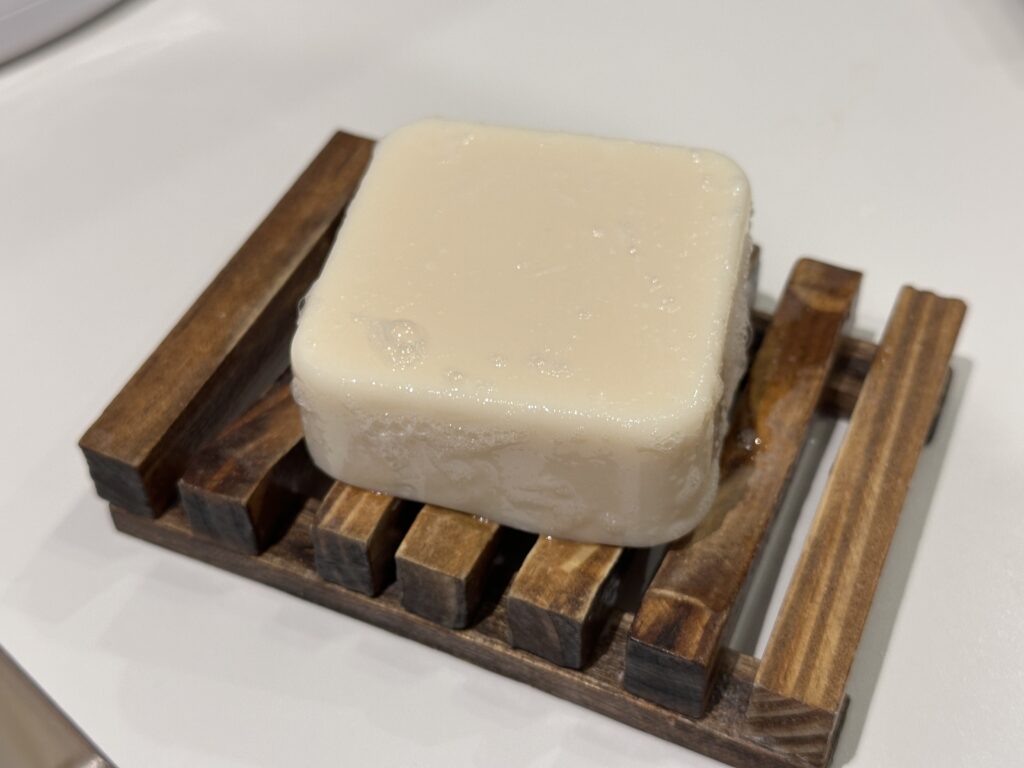
It’s an unusual hobby.
A friend
An early Homo sapien lounges by a campfire satisfied after devouring the boar that he and his tribe successfully hunted that day. They’ve done well recently, so there wasn’t a need to devour every bit of the animal. Excess pieces of fat lie near the fire, where the heat causes it liquefy. A younger tribe member reports fresh fruit nearby, so they douse the fire and set out. Water from the doused fire soaks the wood ash and seeps into the animal fat. Days later, the tribe returns to find a bubbly, slippery substance where the fat used to be. A bold tribe member rubs his hands in the substance. The sensation is new and somewhat alarming, so he rushes to the nearby river to wash it off. Amazingly, the water combined with the unknown substance causes the grime previously caked on his hands to wash off easily!
And so humanity discovered soap. Or at least that’s how I imagine it. However it happened, I find the history of soap fascinating.
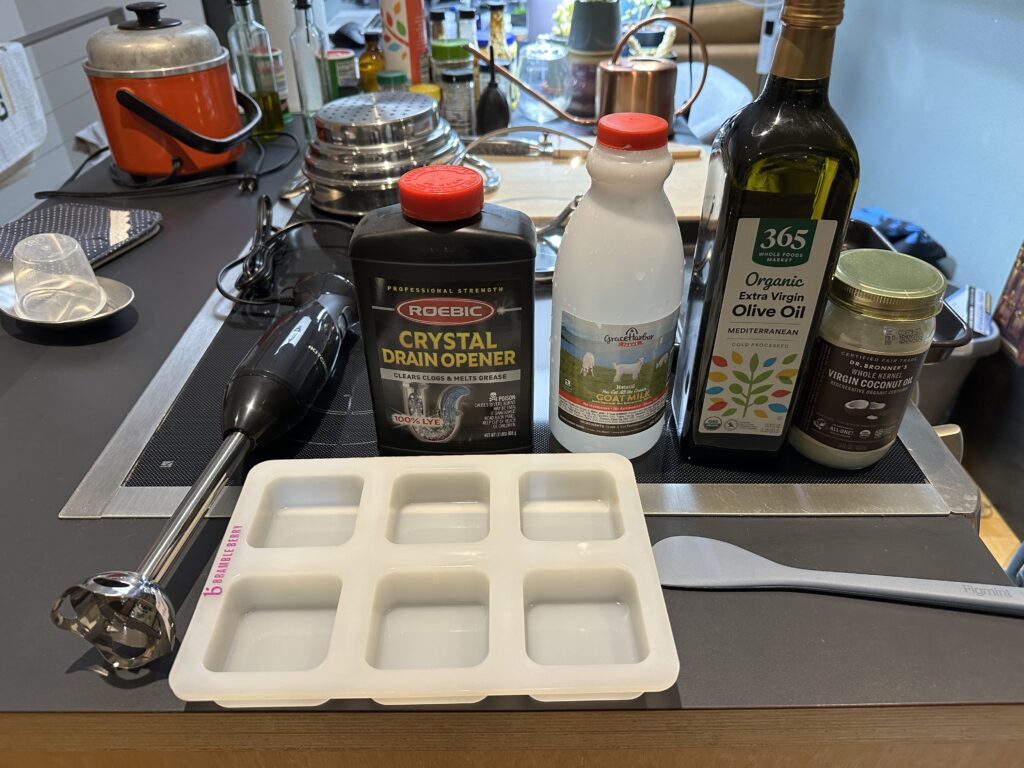
Today, anyone can make homemade soap with ingredients obtained at grocery and hardware stores. I find this just as fascinating as the history of soap. All you need is lye, which early humans likely obtained by mixing water with wood ash, and some kind of fat.
While animal fat like lard or tallow is still used, the holy trinity of modern soap-making oils are olive oil (for soothing), coconut oil (for cleansing), and palm oil (for body).

Alongside this trinity are a plethora of other fats, oils, and additives. Milk, particularly goat’s milk, is quite common. Personally, I fully replace water with frozen goat’s milk in my process to make a 100% olive oil soap.
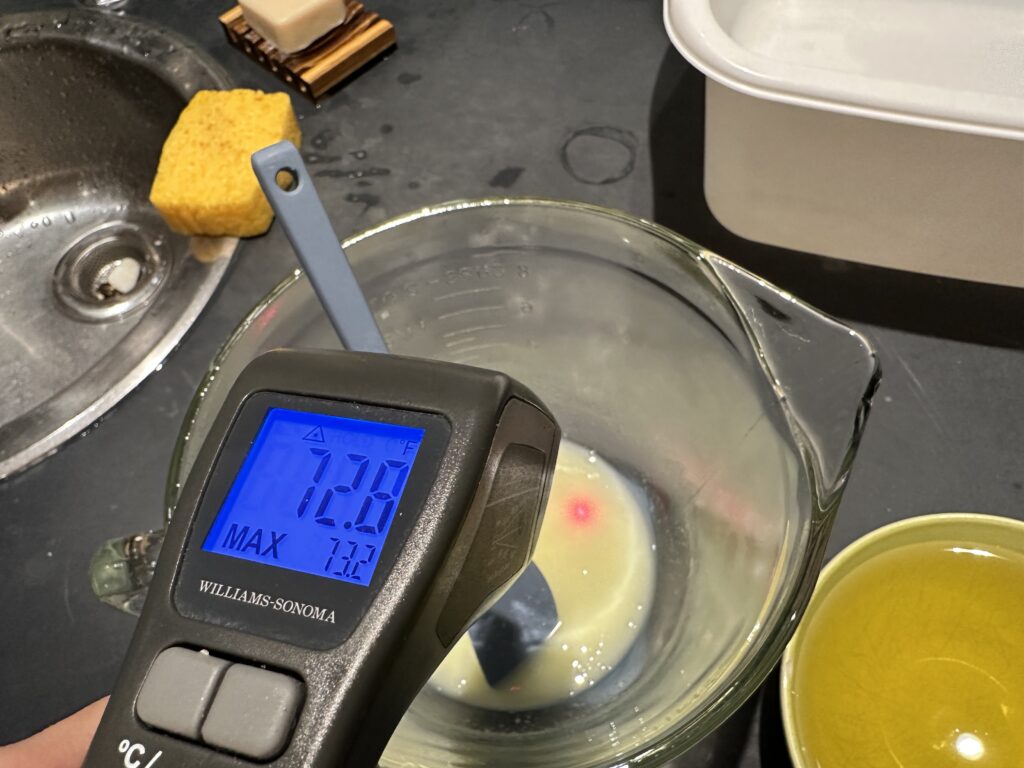
It is tedious and time-consuming to create the lye mixture, especially operating at a steep water/milk discount. But I find the eventual product to be worth it!
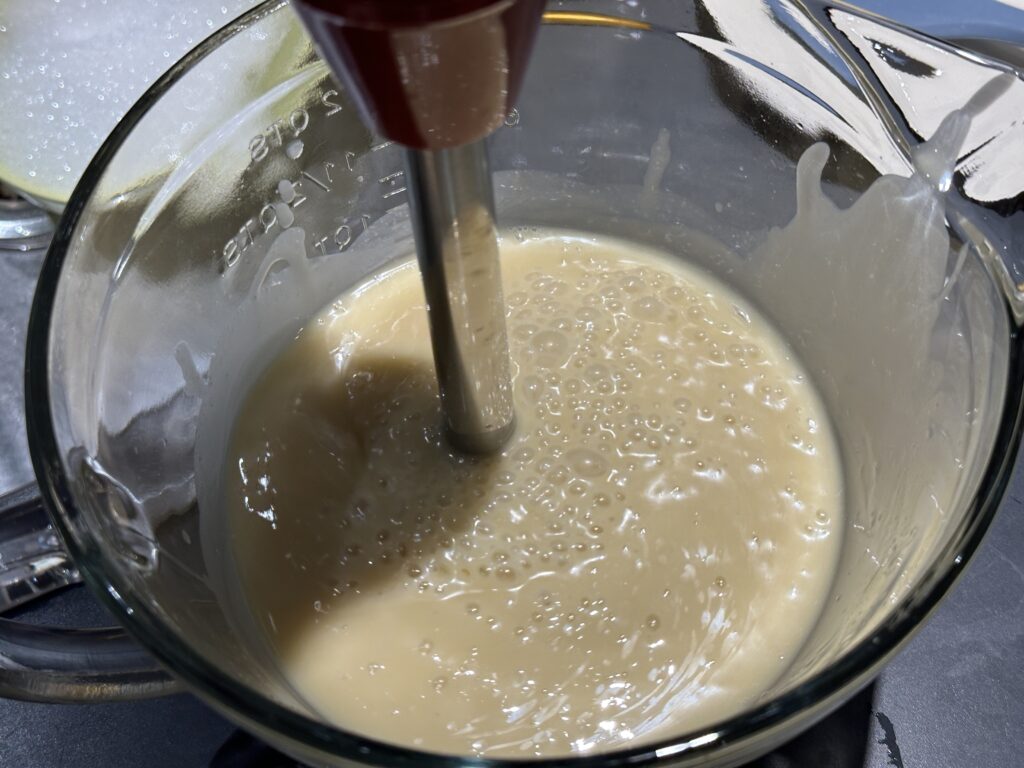
Hand blenders are another modern luxury that would have blown the minds of early humans. 100% olive oil soap is notoriously hard to bring to a trace manually, but the blender can do it in minutes.
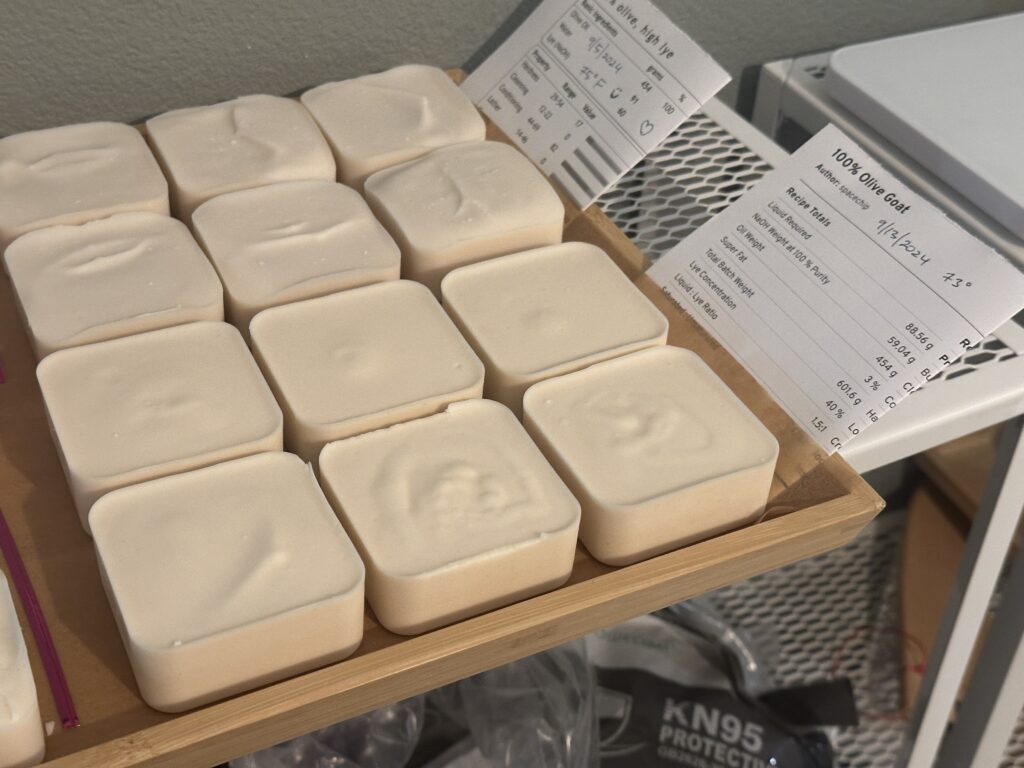
Similar to my other somewhat feminine hobby (plants), soaping requires patience. Even with a 40% lye concentration (this is high), cold-process 100% olive oil soaps needs months to cure.
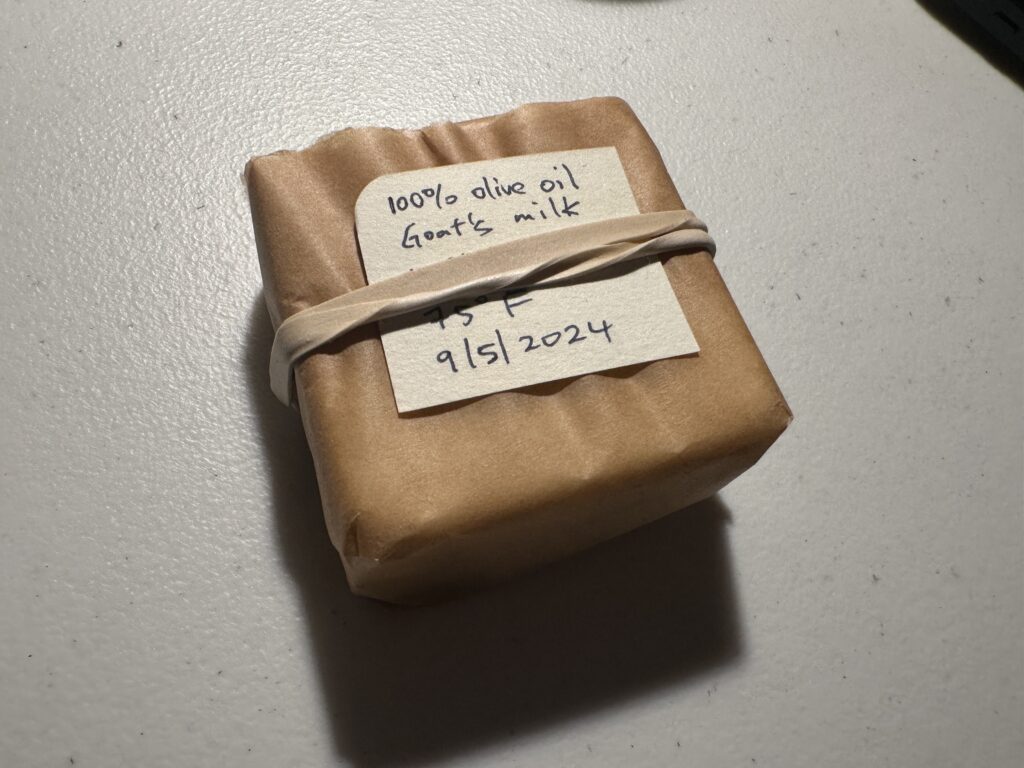
Given the effort, I’m loathe to bestow these bars as gifts. But if I’m feeling generous…